
Insights from top female investors in Australia
Highlighting female portfolio managers for International Women’s Day.
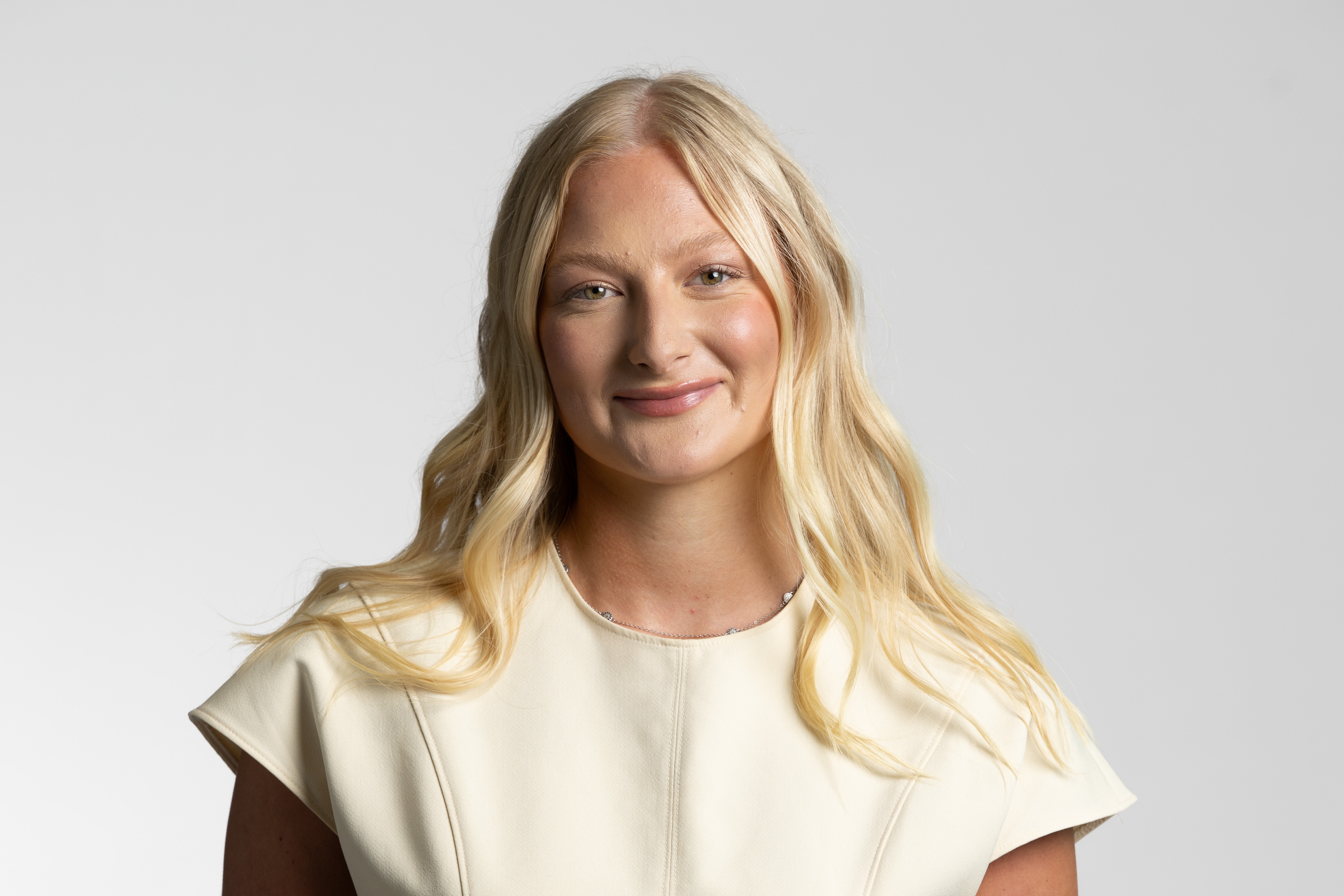
The asset management industry has come a tremendous way since its beginnings. Long defined by a narrow demographic profile, the sector has seen a growing presence of women who offer deep expertise and distinctive viewpoints. This International Women’s Day, we endeavor to dive deeper into the stories of top-performing women who have achieved High or Above Average ratings for the People Pillar within the Australian investment universe, as evaluated by Morningstar analysts. We are sharing what inspired them to become investors, what they believe is excellent culture in an investment team and how to foster it, and their expert investment views on what to watch going forward in 2026.
Pillar ratings are assigned to an investment strategy’s People, Process, and Parent to help generate an overall Morningstar Medalist Rating. Reflecting our level of conviction in a particular strategy’s investment team, process, or the asset management firm, they take the form of Low, Below Average, Average, Above Average, and High.
Rachael Boyte – Senior Vice President and Portfolio Manager, Pimco
Rachael started her career as a quantitative analyst and was drawn to the “excitement and volatility” on the trade floor, since emerging as a highly respected fixed-income investor with a career spanning asset management, macro strategy, and systematic rate markets. She joined Pimco in 2025, contributing to a broad suite of Pimco’s Australian fixed-income strategies and institutional mandates and applying a disciplined macro framework to portfolio construction and risk assessment. As a macro portfolio manager, Rachael focuses on “trying to fit the puzzle pieces together”—those pieces being the consistent flow of economic data, headlines, and price moves—to form a view on where markets could go next.
“Good culture is when the investment team feels like they can debate the investment view and challenge it,” Rachael explained. She believes the way this is achieved is through excellent two-way communication and ensuring a foundation of trust is instilled. “Nobody makes money on every single trade, and we’re constantly having to adapt our view as markets change, so we need people who will speak up and are willing to be wrong sometimes.”
Going into 2026, Rachael believes the market is fully priced for a Reserve Bank of Australia hiking cycle; however, the expectation is for modest adjustments from the RBA this year. “We think Australian fixed income is currently cheap,” she says. The transmission mechanism in Australia is faster than in other developed markets in both the cash flow and currency channels. “The recent economic improvement has been driven by consumption, and we question how durable that will be given the high levels of household indebtedness,” Rachael explains. “The AUD trade-weighted index has also appreciated 6.5% since the November Statement of Monetary Policy meeting, which will act as an automatic stabilizer and have the effect of bringing inflation down over time.”
When it comes to curve positioning, Rachael feels it is worth taking a look toward the longer end, noting that “10-year yields at around 4.75% are nearly 100 [basis points] over the RBA cash rate. Bond rates are higher now than they were a year ago when the RBA had the cash rate at the cycle peak, which makes it an attractive entry point to earn income.” Rachael states that valuations are looking stretched compared with most historical measures and that bond yields are looking attractive over equities earnings yields. “It’s not very often that investors get the opportunity to go up in quality, liquidity, and also in potential return.”
As for the hot topic on the street—artificial intelligence—Rachael strikes a balanced tone, noting that the AI race’s winners and losers remain uncertain.
Dr. Joanna Nash – Senior Quantitative Portfolio Manager and Head of Portfolio Management, RQI Investors
“I started my career in the quantitative side of investing, looking for new insights that may be useful in order to find more alpha,” Joanna reflects on her professional genesis, originating from a research background, having completed a doctorate in econometrics at Yale University. “I always enjoyed the practical aspect of research versus the pure theoretical, so looking at how these insights made it into the portfolio and what impact they had on positions always fascinated me.” This affinity led to Joanna’s increased involvement in portfolio management, while maintaining exposure to the research process. Joanna notes that having an understanding of the practical side of portfolio management reflects higher-quality research.
Joanna has built an expansive career over more than a decade in quantitative investment, culminating in her appointment as senior quantitative portfolio manager in 2020 at RQI Investors, with the role then expanding to include head of portfolio management in 2024. Joanna oversees final portfolio outcomes across RQI’s Diversified Alpha and Value strategies, which are now AUD 29 billion in assets.
Joanna believes good culture is very important for investment teams, both for companies she is analyzing and within her own team.
“I believe you want a culture of trust, openness, learning, and respect. Trust that I can ask my team to complete a task, and they will do it to the best of their ability, not cutting corners but seeking the best outcomes for clients.” And that trust, she explains, is built on a foundation of openness. “You have to be transparent with your team. Tell them what’s happening, share the company strategy—bring them along for the journey rather than just handing down instructions from above. People perform better when they understand the bigger picture.”
Communication is not enough for Joanna. For her, genuine investment in people is what separates good leaders from great ones. “You have to be willing to sit down and explain things. Take the time because when your team keeps learning, they stay motivated.”
Perhaps the value that Joanna finds equally critical is one she learned before entering the industry. “My mother always told me it can take a lifetime to earn respect, but it can be lost in a minute, so you need to be cognizant of maintaining this.”
In terms of outlook for 2026, Joanna admits (as most would) that she wishes she had a crystal ball to help predict the markets, expecting heightened levels of volatility driven by geopolitical influences—namely, policies coming from North America, which continue to have tidal impacts. “A couple of stocks that we currently like based on our alpha model include Resolute Mining as well as NRW Holdings. These both score well across the many insights in our alpha model.”
Joanna expects AI themes to be top of mind for many investors and an area she will be monitoring closely. “We see a lot of forward growth numbers have been built into valuations, and we will be looking to see if these companies can deliver on these expectations.”
Interest rate policy is also firmly on her radar, with one rate rise already having occurred and further increases expected throughout the year.
Katie Dean – Head of Fixed Income and Currency, AustralianSuper
Two aspects inspired Katie to become a portfolio manager—part philosophy, part personality. “I was convinced that markets were inefficient and that investors could be rewarded for this, and I wanted skin in the game.”
Katie spent the first part of her career forecasting economic and financial market variables for clients across government and business. It was within this experience that a pattern began to emerge.
“My observation was that sometimes markets, as efficient as they were, could also at times become focused on the wrong things.” She saw many examples where deep and disciplined research could identify those misalignments. However, Katie implored that research alone was not enough.
“I wanted a hand in the decisions that were being made, and I wanted to be directly responsible. I saw the move into portfolio management as both a natural progression but also as the ultimate test of both my skills and judgment—I wanted the responsibility.”
Katie has built a distinguished career in macroeconomics and fixed income over more than two decades, with the last several years spent shaping one of Australia’s most influential institutional portfolios. Katie joined AustralianSuper in 2014 and has expanded her remit across the fund’s global fixed-income and currency capabilities. Today, she leads a team of 35-40, split between Australia and London, as head of fixed income and currency.
Investing, Katie implores, is fundamentally an ideas and decisions business—and one that demands resilience. “After all, some of the best investors can be right just 51% of the time.”
For her, the best portfolios are built in environments where people approach issues with an open and curious mindset, underpinned by clear accountability. “It’s really important to learn not just from challenges and mistakes but also from success. Why did something work, and is it repeatable?”
Looking ahead into 2026, one view stands out from the rest. “Absent any tail risks, we will continue to see divergence in the path of monetary policy across different economies.” Labor markets are diverging across many economies, she explains, which is typically a strong indicator that interest rate paths will follow suit.
When it comes to AI, Katie’s answer echoes many peers. The dependence on whether AI developments will be inflationary or disinflationary has distinct implications on the direction of bond yields, adding, “I suspect whatever the answer is, it won’t be a straight line.”
These are a few of the impressive female portfolio managers and investors under our coverage. Below, we list the female investors (sole lead or part of a broader team) managing products distributed in Australia that earn Above Average or High People Pillar ratings, indicating Morningstar analysts’ confidence in the portfolio management team. Each of these women’s strategies deserves a spot on investors’ watchlists.
